Note: this is NOT an advert. Could careless which product you buy. Moving on. ¶Wouldn’t you know it. Wait for the right moment and it never comes. Unexpect that moment and it does come. Recent debacle with planetary über-corporation Samsung lead to a firmware update (almost) debacle. As worst-stated in this post, Samsung’s IT Volk need to seriously reconsider how they update their printers. In short, Samsung thinks that in order to update a printer you must first have a windows PC, preferably something XP or better. If you don’t have a WinXP device then you are shit out of luck or you have to get your silly new-school ass to some rinky-dink retailer’s support window so they can do the update for you. Luckily I’m as resourceful if not more resourceful than the global IT Volk at Samsung–and I happened to know someone who could lend me an old WinXP device so that I could update the printer myself. (It was actually kinda cool cause the situation gave me a chance to look over a laptop that still had a serial port on it. ;-)) The problem is, Samsung’s IT Volk seem to think you have to update their products with a .exe file. To prove that that’s not the case, I just did a firmware update for my new DSL modem from D-Link. All I had to do was download the firmware update, which is in a .zip file, unpack it, read the “how-to” .pdf file, then access the update file, which is a .rar file, using any browser and… Boom baby! Update done. And it was done using a 2010 MacBook Pro running Snow Leopard (cause SL is the way I roll). ¶And so. You see goliath Samsung. It’s totally do-able. Bet you guys did’t know that. Now go learn something and update the outdated innards of your IT departments and your laser printers. Rant on. -t
Tag: Technology
-
Forced Obsolescence
 Rant about corporate goliath Apple, dear worst-reader. Yeah, I’m sitting by the fire and my better-half is sewing, my pug is snooring and the MBP on my lap is roaring. While trying to get some work done I get this strange notice from Apple while trying to access their/my iCloud data. Yeah. Talk about a tried and true monopoly nemesis. I know. I know. It’s my own fault that I have all this reason to bitch about Apple. That’s because, at last count, I have thrown enough mulla at Apple that they should come by my house and shine my friggin’ shoes. How much mulla, you ask. Well, let’s run it down, shall we? For tonight is a night of wannabe bragging rights and for praising how I know why Apple is so rich. Tommi’s computer fruit hardware includes:
- 2010 Mac Pro
- 2010 MacBook Pro
- 2011 Mac Mini
- iPad Air and iPad 4
- iPhone 5s and iPhone 4s
- AppleTV2 and Apple TV3.
- Airport Extreme (5th Gen), Airport Express (1st Gen)
Needless to say, we are an Apple household. And to be quite honest, I’m not proud of it. Ok. Maybe for a short time there, let’s say back in 2012, I might have been proud of it. But after the death of Steve Jobs things changed. Buying or owning Apple just ain’t the same anymore. And to make matters worse, Apple’s really going overboard with making their products obsolete by pushing all these updates down user’s throats that cut us off from a very functioning past. My 2010 MBP, with an SSD I installed last year, runs fantastic–because I am still running Snow Leopard on it. Seriously. I even got a new battery installed in it in 2013. The thing runs for eight hours without a charge, more if I turn off wifi. When I upgraded it to Mountain Lion it ran for like two hours. But I digress. The things is, I use all this stuff to the hilt. Seriously. Here’s why:
- We don’t use regular phones anymore.
- When communicating with family and friends, we use FaceTime or Skype or, of course, email.
- We don’t watch TV. We watch everything using iTunes, AppleTV and iPads.
- I haven’t bought a physical book in years. Read everything on iPad and iPhone using Kindle.
- Of course, I stopped using DVD players about four years ago and instead run quite a large media library in iTunes which serves all our devices.
- Just recently threw out the modem/router that our ISP gave us. That thing was the bottle-neck to our whole network. There were times when I could feel that device fishing around for IP address and DHCP issues and subnet mask confusion, etc. Now with just a DSL modem, my network is managed by a single Airport Extreme and extended by Airport Express.
All in all, this Apple household works great. But, like I said, there is something lingering because of the rotting mother teat that is the Apple monopoly. Just the other day, after I pulled off the feat of disconnecting our ISPs krappy modem/router, I went into an Apple store to ask a blueshirt if he knew how I could get SIP running on my iPhone. (The ISP modem/router was also the hub for landline telephony. But since our ISP offers SIP calling, I thought I could just start using an iPhone for that.) Lo and behold. The blueshirt at the Apple store is clueless. And I’m thinking, what the hell does this company do with selling all this fancy, pretty equipment to the masses and when we need a little help with it all all they can say is:
- Sorry, we’re clueless
- Pay me thirty-five Euros and I’ll call a technician for ya.
F*#k you, Apple. And F*#k your efforts to MAKE me upgrade to krapp that I or anyone else doesn’t need.
Link: Planned Obsolescence | Wiki
Rant on. -Tommi
-
WindowsXP Stuck

File path designation on a Mac using Chrome browser. Even a tech laymen like me understands that in order to have this type of error in 2015 it can only mean that much of the tech world is still stuck in WindowsXP. –Update–see below.
Better half bought a new printer recently to replace the bloated HP device we bought only a short while ago. Even though worst-writer is the family system administrator, I don’t print anymore so I gladly turned the task of print-media over to the head of household. Which meant that every other month there was a frustrated voice around the house complaining that she’s run out of ink–again! After failing to convince her that, if she was going to be printing so much, it was time to stop throwing money at the print ink industry, the life of our krappy HP device gave out. The print-head didn’t last two years which meant that we were yet another victim of corporate obsoletism. Putting my cynicism about the corporate tech world aside, our problem is wifey prints everything. She prints design patterns for sewing her skirts. She prints instructions for quilting. She prints mock-ups of pug winter coats. So after the HP krapp died and I was unable to convince her otherwise, she called me up and said, “Ok, I’m buying a new printer whether you like it or not.”
“Oh really,” I said.
“Yeah. I NEEEEEED a printer,” she says.
“No. You don’t. You only think you do because our generation was raised on paper. Come on. Times have changed, honey. And you have all these devices. You have a Mac, you have an iPad Air, you have an iPhone. You don’t need to print anything anymore.”
There was a short, intense pause. I could hear dogs barking. I could feel the rumbling of the bats in a cave. I could smell sulphur as Hell’s vengeance was starting to brew.
“We’re not having this conversation again. I understand your point of view but that doesn’t mean I have to answer to you. Now. I’m getting a printer whether you like it or not. Just tell me which one to get!”
“Ok. Fine. Geez. Get a laser printer,” I said, beaten.
“I know that! Which one!”
Enough about males trying to change the minds of females. And. Long story short. I told her if she couldn’t wait for me to research which product to buy then to get the Samsung. Which she did. She came home with it and lots of smiles. But by the look of the packaging I knew that trouble was inside. At first the printer worked great. Full compatibility with our Macs. But then, the other day, I noticed that wifey’s iPad was hooked up to her Mac. Which meant that she was updating to iOS8. Oh well, I thought. There is only so much we men and masters of this tech universe can expect from our wives. The update was gonna come eventually. And so. After the update she can no longer print to her new, fancy laser printer using her iPad. Kaboom!
Which brings me to the pic above. After an initial “I told you so” discussion with wifey, I grabbed the printer and took it to my office. I began the process of trying to find the problem. My iPad4, which was and will remain on iOS7 for as long as possible, printed fine. After reinitialising the printer, setting it up using the included software CD and a USB connection, there was nothing to be done. The iOS8 update is the problem. Ok. Google it. Lo and behold. The printer needs a firmware update. Great. Found the firmware update and downloaded it. It’s a .zip file. Unzip it. (Pause. Breath. Stop the presses.) What gets unzipped? Wait for it… A friggin’ .exe file. What? Are you f’n kiddin’ me. Samsung releases a firmware update for a €300,- laser printer and that update is windows ONLY? Wow. After continuing to search the Interwebnets for a Mac compatible file, nothing is to be found. The whole time I kept thinking of the moment I got rid of all my old Windows stuff back in 2011. And don’t get me wrong here. I’m a windows fan. I love Windows 7 and 8. My problem is I can’t afford both OSs. So we’re an Apple only home. Oh my!
This is a moment when I’m convinced there is no progress in this world. Seriously. How is it that a company like Samsung can pull this off? Oh yeah. It’s Samsung. And it’s not just the fact that they make a firmware update for windows only. It actually gets worse because I didn’t want to give up on the fact that I could solve this problem. I kept thinking about how I could get this update installed without a windows machine. What about a USB stick? The printer has a USB slot. So I tried it. There is no interface to allow the printer to access the USB stick that way. Ok. What about something online, provided by Samsung? There is nothing. Then I thought, hey, what about my network access? As is the case with most networked devices, the printer has a setup page one can access using a browser and your internal network. Just find out what the printer’s IP address is and put that in a browser. The printer even has a “maintenance” section that includes a firmware update protocol. All one has to do is tell the browser where the update file is located. But then the browser update protocol cannot recognise the file path on a Mac. And that’s the straw that broke the camel’s back. Wow! This is such a bummer in 2015, man.
So now we wait for a response from Samsung support on whether or not they will bring the fruit of update joy.
Update:
Luckily I only had to spend a few hours on this whole printer problem. Also, hats off to @SamsungSupport USA for quickly responding via twitter. (And since this was my first Twitter Direct Message (DM), I finally learned what that is all about.) The only problem is, Samsung didn’t help much. After atypically asking the customer for further info about the product–which they really didn’t need since this was about their firmware update being windows only–I finally starting asking neighbours if they had an old PC/laptop that I could borrow in order to update my printer. The second neighbour I asked obliged and handed me a really, really old Compaq pentium laptop. It was neat to start the thing up, it booted right quickly (for its age) into XP and after waiting here and there for the old machine to perform, I was connected via USB to the printer. The firmware update took about ten minutes during which time I couldn’t help but look at that piece of ancient tech history. It had a 1,4mb diskette slot. Even the wifi pcmcia card worked. More hats off (than to Samsung) to old PC equipment for making this happen. Now better-half, using her iPad Air running iOS8 can print to her new laser printer.
Rant on.
-
The Masters of the Switches

Why is it, dear worst-reader, that the older I get the easier it is to distract me? I mean, it happens all the time. When I’m walking Beckett, the killer pug, I lose focus of the little guy whenever any female passes by in a pair of jeans. When I’m putting up a Xmas tree, hanging those obnoxious bells and whistles, I think more about the Mustang I’ll never afford myself. And then there are the moments, while reading what should be a great book, that has been on my reading list for a long time, I’m taken away from it because the author references an old movie that I swear I saw once but according to the distracting research I do regarding that movie, I suddenly can’t remember if I actually did see it. This was so distracting in fact, that I took a break from the book and found the movie on iTunes to watch (again). And while watching this three hour piece of movie making magic I was totally distracted by the thought that, even though, according to Wiki and various other sources, which all claim that the movie was only recently made available to the public on DVD, I thought: but I saw this movie way back in the mid 80s. Didn’t I?
Distraction.
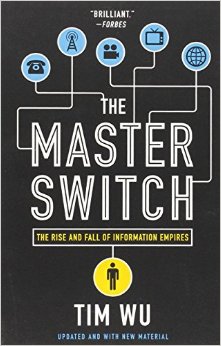
The movie is called Heaven’s Gate. According to Tim Wu, the author of the book The Master Switch, which, after numerous interruptions and distractions I just finished, the movie is the reason for one of Hollywood’s greatest film studio failures. But that’s neither here nor there. I’m just perturbed by the fact that I can’t remember with enough exactitude where and when I saw this movie. For after (re)watching it the other night I’m sure more than ever I saw it before. And allow me to say this distracting thing about that movie: this second viewing left me more in awe than the first. But when did I first see it? Come on. Come on. Think! It was either a screening at my University cinema in 1985 or on VHS in the early nineties while researching a subject for a play that I would never write. So I broke away from the book that couldn’t keep my attention anyway and very much enjoyed watching a movie that everyone should see. A few more worst-thoughts on Heaven’s Gate here.
Back to the book.
Tim Wu uses the United Artist debacle of the 80s as an example of how and why vertically integrated industries fail. And I take issue with that. United Artist didn’t fail because of vertical integration. It failed because #americant hadn’t yet established the standard of credit/debt as the sole means of consuming to survive. Obviously that’s a bold statement and I’m too lazy to provide enough ammunition in this worst-post to battle Mr. Wu on the subject–because I actually do want to say a nice thing or three about his book. But allow me this: There is one very important thing that Wu misses while explaining how some companies die and/or fade away because of whatever strategies they employ to earn more money than god. If United Artist had access to credit in the 80s like film studios do today then the measly sum spent on Heaven’s Gate would have been a drop in the bucket. In other words, at the time the collusion of government and, let’s say the Federal Reserve and Wall Street banking, hadn’t yet been established. It took till the end of the nineties to get to that point–I suppose.
There’s actually a whole Wiki page on the issue of Film Finance. And keep in mind, the word “finance” today is synonymous with debt. Go figure.
 But I’m off subject. Again. Distracted. And so. Let’s worst-write further on Mr. Wu’s idear of Net Neutrality and the less coined Separation Principle, two nuggets that Wu does a great job addressing but I think fails to ram home. First. Let me say this about Net Neutrality: Bullshit. That’s what Net Neutrality has become in the short time since its coinage. And I’m really sorry for that.That there is a debate regarding how information flows through the Interwebnets is both disgusting and astonishing. I remember vividly the monopolistic abuse of AT&T in the 70s and 80s. I don’t know what I would have done in college without my MCI card that allowed me to use practically any phone anywhere at rates I could afford–all on lines provided by the previous evil Bell monopoly. That #americant allowed a company like MCI to be gobbled up by the very system that it broke up is, well… #AMERICANT. On top of that, it feels like, because of the complexity of technology, politicians and dysfunctional corporates elites have easily confused the debate by turning Net Neutrality into a stump when it could be a majestic tree. Not only that, #americant has murdered people because of the underlying truth that is Net Neutrality as a whole. One only has to look at what happened to Aaron Schwartz. As far as the Separation Principle goes, well, again, sounds great, makes sense, but how do you get stuff like this across to a public that uses the Interwebnets like it used to use girly magazines in teen-age tree houses?
With that bit of worst-non-sense, I digress. The Master Switch is a great read even though I was often taken aback with the amount of text Wu wastes on certain topics. That is not a criticism of his writing, though. He really does a great job of holding together what is essentially a huge and disparate amount of information. I say disparate because I do not believe that the telephone industry in anyway has anything to do with the advent of what the Interwebnets has become (is becoming). The technology behind this stuff is irrelevant because worst-writer believes that content will always be at least one step ahead of context. Put another worst-way, a sculpture or painter already knows her/his great work of art is in that block of rock or bare canvas. And so. I could have done without Wu’s narrative of #americant early 20th century monopolies–although the bit about how Hollywood was founded is a nugget I’ll keep with me forever. That said, I guess I wish Wu would have spent more time ramming more stuff down the throats of the powers-that-be who are re-monopolising everything and who are also currently lavishing in their ability to ruin life for the rest of us in the name of greed-limiting access to what should be free: information.
Rant on.
-Tommi
-
Interwebnet Insecurity

Oh, dear worst-reader, here yet another exchange I recently had with a dear old friend. As you know, from other exchanges (here and here), sometimes we get places–intellectual places. But other times we just ramble on. The point is, ramble, worst-writer. Yeah, that’s the point. Anywho. I know you’re probably wondering if any of this is actually real. It could, obviously, just as well, be played out in my mind. Obviously. As I sit each wasted day, lingering in my demise and lusting in my failure, it is hard not to talk to myself. But that is neither here nor there. What’s important is that I’ve managed, thru therapy and other self-medicating means, to stop having these conversations in the bathroom and in front of the mirror. Or something like that. So here we go. Oh. Before I forget. This worst-works best if you start at the bottom. Rant on, baby. And good luck.
Dear Old Friend,
Well, then, I guess that about covers it. No good answers. (Even though I provided a pretty good one.) Nomatter. As usual, let’s pack it up then and go to the mall.
-ww
Dear Worstwriter,
Good stuff. So there are no real current answers. Maybe this is a place to throw some billions of those newly printed Fed Dollars. Invest in what it takes to move commerce to some “network” and open the “internet” to what it should be.
Your Old Friend
Dear Old Friend,
You have an interesting idea with ‘central registry’ but it’s not feasible at the IP level. I also wouldn’t trust a central repository of that kind of data–hence that’s why the Internet evolved like it did. Perhaps here we are back at a point you made a while ago, something about inventing a new Internet. Btw, the .com or .net or .gov, etc., domains are not constructed to manage information the way you’re suggesting. DHCP and DNS are already stretched to their limits. There are simply too many users of the Internet today and too many internet addresses to turn all that upside-down. The solution to privacy is much simpler, in fact. For one, the issue of privacy doesn’t start with Internet users or internet addresses–even though there is encryption. The whole problem is nothing more than law-makers in collusion with corporations–both trying to guarantee profits before anything else. So the solution is Net Neutrality. Making it illegal for cellular carriers to own cellular data would be a place to start. Making it illegal for ISPs to monopolize Internet access is another place to start. Also, it should be illegal for the government, without a due process (a warrant) to see where I’ve been on the Internet. And I should have the right to determine what information Google, Apple, ISP, etc., is allowed to keep from my Internet usage. As far as anonymous payment is concerned, PayPal is a no-go. Paypal emulates banks. Bitcoin and/or crypto-currency is the answer and it already scares the shit out of the status-quo. Combine crypto-currency with Torrent technology and you can over-ride the open-ness of the Internet when needed. Btw, the thing holding back Bitcoin right now is it’s complexity. I equate this somewhat to the complexity of the Gold standard (not Gold, persay, but the established Gold standard that Nixon got rid of). Bitcoin is gold. Someone will eventually turn it into a gold standard and then that standard will be superseded by something else, which is where we are today with monetary policy. But the thing with Bitcoin, or, more importantly, crypto-currency, is that no one can own the so-called blockchain or the way the codes is generated to create value, i.e. no central bank. Or maybe not. I still need to give that some more thought.ww
Interesting WW,
Yea I see your point. Now every social media to commerce site needs all this personal information just to allow access. Then hackers steal it.
So why don’t you propose a “central registry” like the folks who house the .xyz databases. The central registry will have the necessary identification credentials for every participant. Then you get a user id number, like an IP number that IS your permanent internet identity, just a number. Every transaction you make or what ever you do, simply uses this number, which for monitory purposes can be linked to the central registry, where your preferred payment solution/s are stored. You could choose bitcoin or a credit card or a debit system or some virtual currency like a paypal account. Whatever you want.
Anyway, then all companies are off the hook, nobody knows who you are, all transactions are antonymous and only subpoena for a particular suspected criminal event can get records, which incidentally are all encrypted.
Thoughts?
Your Old Friend
Dear Old Friend,
I agree with “the Internet was never meant to handle secure transactions.” But I do not agree with “nor (does the Internet) preserve an individuals privacy.” When I first started using the Internet the multitude of ISPs alone enabled a level of security that most can’t even comprehend today. The problem therefore is the consolidation of Internet access. Whether I used Compuserve or some local German ISP back in 1994 that was routed through some guys basement server, my identity was never part of Internet access. I remember my first purchase on the internet, too. I bought a CD with a Linux install from the US. I was probably using Compuserve at the time and an analogue modem. Without having to register with the website (which is standard today) that was selling what I wanted, I just gave them my (German) credit card info and within ten days I got my CD (and had a blast trying to figure out how to install Linux on one of my old Macs). Anyway. The Internet could easily provide secure identity and privacy but users do not insist on it and because of that politicians have answered the beck and call of corporations to NOT make laws protecting privacy. Privacy could actually be easy.
ww
Hi WW,
Well it is still called a “crises” but I liked this point:
The Internet was never meant to handle secure transactions, nor preserve an individual’s privacy. Our rush to leverage the Internet for legit commerce has spawned marginally ethical business ventures while also creating vast criminal opportunities. (Links have been removed to protect the innocent.)
Ok, so is somebody actually saying what is obvious for a change?
Your Old Friend
-
Security Data Ukraine
 Another contribution to the Interwebnets containing an email exchange with an old friend. At times this friend brings the best out of me but other times s/he does not. Nomatter. The point is to think, express those thoughts, get them down for re-reading and then figure out what drove worst-moi to write/contribute in the first place. Or something like that. Don’t forget, for proper chronology, start at the bottom. Good luck. Rant on.
Dear Old Friend,
The reason there cannot be a completely different/separate Interwebnet for, as you put it, B2B, is because the Interwebnet protocol is not there. Could someone invent it anew? Maybe. But at this point it’s irrelevant. The reason for that is the environment that gave way to the Interwebnet is gone. No one will take the financial risk to actually try to (re)invent it or duplicate it. And why should they? And don’t forget, the reason the Interwebnet is what it is–is because it is open, it is decentralized. Which also means, no one will ever be able to close it down, either. You might be able to shut parts of it down, by turning off electrical switches and servers, but that will only effect compartments (i.e. countries, phone networks, etc.) Like everybody else using it, businesses have been on a free-ride from the get-go if they use Interwebnet protocols and now that they are being called-out on it, by hackers, it’s too late for them to do anything about it. Hence, all the fear mongering for security is not about you and me being afraid–which is what I’ve never talked about–but about scaring the companies to either invest or buy into the security scam. That’s why the articles and graphs you read are all on sites like MarketWatch and WSJ–fear is the only thing keeping the “markets” going. Which brings me to your point about encryption. Encryption is not the answer. They’ve tried that. They tried it with DVDs, CDs, DRM, etc., and even the credit card swipe devices at Target and Wal-Mart. Encryption will work for the individual and things like email (remember I offered that we try it?) but for the data exchange that is required by the whole Interwebnet, encryption will be too complex to employ at the scale the Interwebnet operates. And get this! The powers-that-be DO NOT want total encryption. Government must ride the slippery slope of ideology and politics dictated by dollars, my friend. As I’m sure you’re aware. Full encryption would mean that government couldn’t monitor everything. And, yes, they (govt.) even monitor and spy on bank transactions. Remember, it’s not only about encrypting the data but also enabling encryption in both software and hardware for the entire Interwebnet. To do that you’re talking about a huge cost, mostly made up of man-hours–and with the level of globalization that we live in, there is no way people would be hired to fulfill the level of man-hours required to make it all happen. Just consider what all — ALLLLLLLL — router/modem manufacturers will have to do to put hardware encryption into their devices. Dude, it is so NOT going to happen. Not to mention the fact that hardware encryption is probably easier to break than software–just ask the the NSA about that. The way we use technology today was not invented by any one person or company–it has grown out of the magic of open-ness and decentralization. That cannot be cracked or broken or controlled.
Cheers
Hey Worst-Writer,
The only thing I can say about the data on the Internet thing is that since I ran my company back in the 1990’s all business was moving that way. All B to B transactions have been on networks for much longer then the average consumer’s interaction with networks. Even if a completely separate network were established for BtoB channels, there are still hacks. There are hacks everywhere but there is no turning back. Everyone expects everything to be accessible. From travel to buying a scarf to looking up tax data or bank accounts. The access is expected and there.
From my perspective, the real technology would be in encryption. I may be wrong but I don’t think it would be hard for companies to pull from networks all but immediately necessary data. Then you massively encrypt all of it. Every log in would have to run algorithms to very or authenticate every “user” access. If someone wants to use a proxy etc. they don’t get access, plain and simple. The only people who get access are the ones that pass a set of protocols and after that, what they can access is limited. Archive data can be obtained but only through a series of proper protocols, which can all be automated… I mean everyone has processing power in their computers that would allow all of this. Internet connections would have to be more robust so places like developing countries and much of the US people would complain and have to find other solutions. But for the most part, It seems to me security should not be the problem it is but till now the approach to security has just not been taken a seriously as it should and what is called “security” is actually just “prevention of access” not true security. Anyway, that is my 2 cents.
I still don’t see the fear mongering cause I don’t know anybody, anybody, anybody who fears anything when it comes to credit card data etc. There is no privacy any more, everything everyone does is monitored and every savvy marketing company knows everything about you, your habits, health, location etc and I don’t know many complaining. There is no fear in security from a consumer perspective. Corporate’s need to do a better job but please tell me WHO benefits from SOME UNNAMED person spreading “fear” about security?
Your Friend
Dear Old Friend,
I can only continuing saying that the whole data-thing is a hoax. I don’t believe a word of it. Do with it what you will. What’s really going on is fear mongering. Fear-mongering to support an industry that thrives and earns on that fear because it’s easy to earn from. The first article I ever published, which was almost fifteen years ago, began with: if your business needs security don’t put your data on open networks. That might be a far cry away from the closed world of credit card fraud but the gist is the same. When I stopped working back in 2002 the only industry that could have potentially hired me was data security. Since then the whole idea of “risk management” has exploded, whether it’s about managing the risk of investment or the risk of a data security breach, the operation of such activity is the same. This is simply what happens when there’s no creativity left in the market, when all business runs on laurels, when everything has been marginalized to the hilt. Game over — so you better at least be secure. It’s all bullshit.
As far as the Ukraine… I think this is a test for Germany. I believe that Merkel has cut a deal with Russia/Putin that leaves the Ukrainians hanging but energy flowing–and the US has approved that deal (because internationally Obama is a few shy of a six-pack). The EU press, the German press and the pacified anti-war hippies are blowing this way out of proportion. Sure, people are dying, but when was that not the case in these countries since the collapse of the Soviet Union (or even before that)? Remember Yugoslavia or Hungary or Georgia? Those in the Ukraine that are “western” oriented have screwed themselves. They have chosen as their leaders people who are probably as brutal if not more-so than Putin. The oligarchs of Ukraine are gorillas, man. I read recently that it was probably one of those gorillas that shot down the Malaysian plane, he was the one who owned the Russian-made missiles capable of doing it–and the nutbags serving him actually thought they were shooting down a Russian spy plane because the pilots of that flight diverted their course to avoid flying over water (Malaysian airlines hasn’t had much luck recently flying over water!) and the guys running the missiles weren’t told that. Also, Ukrainians should have known that Putin wouldn’t allow their country to side with NATO–which is the ultimate threat to Russia, ain’t it? Just look at what happened to Georgia. I think the situation is dire for Ukraine but I don’t think this will turn Europe into pre-ww1 situation. Putin will probably contain this, probably with brute force, but in the end it will be contained. The EU is not going to war over this. Of course, it doesn’t help that the only significant contribution of Ukraine to EU are its ports for energy distribution from Russia.
Cheers
Hey Worst-Writer,
Bloomberg is not fear mongering. This is not MSNBC or FOX this is Bloomberg and corporate america is literally under attack for data. The fact that card data is so prevalent that criminals only get a few cents to at most a couple dollars for every “live” card number shows that. The damage is to merchants not the consumer so this is not fear mongering. Nobody, I mean no individual I know is really afraid of it cause the banks and merchants take a hit not the consumer.
Anyway, my barrage of info on the subject is just to indicate how prevalent it is and how versatile the criminals are.
What the Fuck is up in Ukraine? They are up to like 3,000 dead. There is a fucking war going on there… The markets keep going higher and nobody seems to give a damn. It is real man, this is not Syria or Iraq or Lybia or Yemen… These are Ukrainians, people with real weapons, who know how to make them, not some fuckers who live in mud huts and have no technological means to product a damn microwave let alone weapons. These guys are part of the race of people who can do some real fucking damage when they go to war… It’s got to stop.
Your Friend
Dear Old Friend,
It is an interesting graph… if you like red on black.
So, do you think, because I’m a registered user of Evernote (but I never use the krapp), that that’s how the crooks got my German credit card number this summer and used it to try to buy stuff at a Canadian Target store when I was in Virginia, USA? Numbers that indicate that what-ever million user information was stolen means nothing in the context of these two graphs. If they listed what damage was done to individual card holders I might be interested. Otherwise, again, this is only fear mongering.
Cheers
Hey Worst-Writer,
Look at this graphic: http://www.bloomberg.com/infographics/2014-08-21/top-data-breaches.html
Pretty amazing eh?
Your Friend
-
Examples Of Ignorance
It’s 2014–if you’ve forgotten. Or maybe you avoid the clock all the same. Nomatter, dear worst-reader. For today we have yet another example of American’t ignorance and how that ignorance rules/governs everything. Or maybe not. First. The situation. Or should I call it: Reality? Either way, in 2014 a huge chunk of America still has no decent Interwebnet connectivity. The fact that an even bigger chunk has inadequate connectivity we won’t address here. Yet who would have guessed that it takes a conservative politician–in this case a politician in the form of one of them republicans–to bring the good news (and I don’t mean religious) to someone’s ears. The politician is potentially seeing the light regarding the anti-competitive nature that is the US economy. Or maybe she only sees all the nutjob constituents who elected her and who might have woken up to the fact that the Interwebnets is important and it’s about time they get some. Or maybe not. The thing to keep in mind about this post and the link below is that if you look beyond the lines, get informed about what’s going on, etc., this is as good as it gets in 2014 as far as technology goes in America. Add to that the fact that there were and still are millions upon millions of Americans who would have gladly voted for the likes of Mitt Romney & Co.–who carries the conservative mantra that corporations are people and therefore should have the same inalienable rights as people–nomatter what the consequence–and that is exactly how the telecom company who is fighting the idear that a state municipality should supply its citizens Interwebnet connectivity because the corporation won’t… Well. Nuff said. Good luck suckers. Rant on.
How big telecom smothers city-run broadband | Center for Public Integrity.
-
Scavenger Econ
Oh, dear worst-reader, we are living in scavenger times. These are times where all that is left are scraps. You know, the scraps left over by the other half. You know, the haves and the have-mores. Oh, how they laugh and giggle as we jostle around, tinker to nowhere, continue on our beloved pathway of apathy, disdain, sweetened hatred. It is, dear worst-reader, the year AD twenty-fourteen and I’m no longer shocked that the other week my credit card was cancelled. When I asked the haves and the have-mores (the bank) why they cancelled my card, they said it was because there was a suspicious transaction on it from Canada and they were trying to protect me. Well thank you very much, powers-that-be. Except I was no where near Canada at the time and they knew that. And I have since cleared up the whole ordeal–except the embarrassing moment when that clerk yelled through the store that my card was cancelled. But I digress. In the meantime, I continue to try and understand credit card fraud–which has brought me to a few other conclusions–all of which I won’t bore you with here. Or maybe I will. From what I’ve read so far, see links below, the credit card industry isn’t the only one dealing in scavenger economics. But there is something that I’m NOT reading about in all this. Did you know, dear worst-reader, that most of the news serves only to produce fear which in turn is supposed to make certain people react to that fear? Fear drives the world’s economy now. Indeed. Spreading fear is really the only driver of “markets” in scavenger economics. Have I said that enough? Then there’s the idear that banks (the haves and the have-mores) know precisely how credit cards are used by their customers. They have a plethora of mine-able customer data that The Googles–and even the NSA–can only dream about. Stealing a credit card number, name and expiration date is one thing but claiming that there can be rampant fraud on that card because someone copied that data from a network is something else. Banks don’t have this under control by now? Which means that credit card fraud is really exactly that. The fraud is being perpetrated by the banks to protect what’s left of scavenger profits. I mean, come on. The way people are handed credit cards–like sweets to a baby–if that doesn’t have scavenger all over it I don’t know what does. With that in mind, here’s the thing that the “market” doesn’t want to discuss but is happy if you are afeared. In a scavenger economy, where money can’t flow anymore, corporations either protect their profits–because those profits are widely accepted as an entitlement–or they must find new profits. Which brings me to the scavenger tech world. Just have a look at what’s going on with USB, the Universal Serial Bus standard that has long since worn out its welcome where all hardware makers can question the entitlement of licensing fees. It’s been recently discovered that USB devices have all been built with programmable ROMS. Really? What a curious and most certainly convenient discovery. Convenient because it’s a way/excuse for hardware makers to make something obsolete and thereby introduce something new that will cost us all more money. And so. The part to make you afeared is simple. The firmware that drives USB devices and enables them to interact with PCs can be changed/modified. The tech world is scrambling right now over this. If it’s true you can literally steal a USB keyboard from a bank, modify the ROM of the keyboard’s USB connection, get it back into the bank where it’s hooked up to the banks computer and then rob the place. Are you afraid yet and willing to pay more for the next SAFE technology? But I say, just like credit card fraud, this is all Bullshit. Bullshit. Bullshit. These industries are suffering under the scourge of our scavenger economy. What corporations consider entitlements are being threatened. USB is dying. Banks don’t want profits infringed upon by having to pay more for secure cards. What to do, what to do? I know what I’m gonna do. It’s time for a cold one. And. Rant on.
The article that spreads fear | MarketWatch
Credit Card Act 2009 | Wiki
Credit Card Fraud | Wiki
Chip based cards already available | Arstechnica
Oh no! Hackers Can Exploit USB Devices | Deutsche Welle
Evil USB, We’re Gonna Miss You | Arstechnica
-
Happy Failure
Schadenfreude? Maybe. Read link to article below and the links it links to. I know that wishing ills to others has its payback. But I guess I’m willing to accept that consequence. At least in this case. What better example is there of the greater-than-though meritless workforce of my grand united mistakes than those who “work” at Microsoft? Having worked in the confusion of the silly dotcom boom of yesteryear, I experienced first hand how America turned “work” into compulsive behaviorism. Behemoths like Microsoft and not excluding IBM, Oracle, various major consulting firms (I worked for two of them), were all at the forefront of turning the clueless American workforce into the dip-shit machine they have become. How deserving. When I exited it all at the end of the 90s I wished it good riddance. I suppose, having been blinded and stunned at the ten-plus years of work that I had invested, I was also wishing it well–because I had found a way to get out. But then the years went by. I realized that it was my own poor judgement to quit. All I did was hurt myself. Obviously, today, I’m better off than if I would have stayed in it. And if I had to do it again I would probably do it almost the same. But still. All the Automatons that I left behind, all those semi-humans who never had an original creative thought in their lives–oh, how they hung on. They took loans to get “advanced” degrees. They listened to their bosses who got to where they are by playing musical chairs better than others. They churned with the currents and they did what all do. Propagate, get drunk, go for a jog or watch Ellen/Oprah/RealityTV. And then. They laughed and joked on their weekend pauses or dictated vacations. Unlike me, they rode it out to get to where we are now: massive stock market bubbles that enable companies to ONLY borrow money to pay their bills, the cost of living skyrockets to match the burden of quantitative easing that matches exuberant national, state and personal debt obligations, etc. Indeed. The west is literally annihilating itself, lead by American’t, and no one still participating in it sees a thing. Ha. Ha. Ha. I’m laughing. Oh well. Failing upwards has that effect. I guess. So it’s time for me to plan my Africa vacation. Yeah, baby. Jump ship if you can. Otherwise. Good luck suckers. Rant on.
Microsoft To Layoff 18,000 Automatons | Zerohedge.com
-
My Dotcom Book
As bad as things were at the end of the 20th century, the beginning of the 21st century is obviously worse. But there was some good in the 1990s that’s easy to forget. Anyone remember the Dotcom boom? I’m still waiting for the definitive book to be written about why the new-economy was so easily gobbled up by the old-economy. Yeah, that’s how I see it. The old beat-out the new–and we are stuck with living in the shit of the old. Well. If I ever get around to writing that book, here’s one reason I’ll cite as to why American’t decided to go back to its lusts of petroleum and war for the basis of consuming to survive. Or something like that.
The Supreme Court’s baffling tech illiteracy is becoming a big problem – Salon.com.
-
Ronald McDonald Meets The Amazon
Bezos gave away a children’s book to the audience to accompany intro of new smart phone. So. Like. Does that mean he’s trying to get the kids hooked like a certain fast-food seller did with a clown? Nomatter. New phone looks great, very impressed with evolving eco-system Amazon products are connected to. But there is something creepy about it all: hardware being born out of a shopping portal? Weird. Still. So glad there is competition in this arena. Except for one thing. This is stupid expensive.
Amazon Fire Phone: hands-on with the ultimate buying machine | The Verge.
-
Is This Huge
NSA spying? Privacy? Digital footprint? Why isn’t this being covered more? Is there any other hardware maker that has ever offered something like this? It is in its infancy but the more I worst-think about it the more worst-baffled I get. Apple is offering a way to protect your privacy by randomly generating identifier codes (MAC addresses) that routers can pick as your device scans for a wifi connection–which is something like a dream-come-true for shopping marketeers. And it’s included in iOS8. Obviously there is probably something self-serving behind this, like Apple’s iBeacon. But still…
A tiny technical change in iOS 8 could stop marketers spying on you – Quartz.
-
Obsoletism 101
Even though worst-writer knows they’re coming, he’s relieved there were no hardware announcements at today’s WWDC14, Apple’s developer conference. Reason? I dread all Apple announcements because they are only another indication that the krapp I’ve bought so-far is that much closer to what Apple does best: making krapp obsolete. Sure. In a day or three or maybe in a few weeks, hardware announcements are inevitable. Till then I’m good. But then again. I do like the “continuity” krapp Apple’s just announced even though I won’t be able to take advantage of it because, well, my hardware, most of which is from 2010 and 2011, won’t work with it. Way to go Apple. You’re so good it hurts. Seriously. You’re the best maker of the best throw-away krapp there is.
Apple announces iOS 8 with widgets and OS X Continuity | The Verge.
-
Up Till The End
He does a great job up till the end. Because. There’s no need to ask the apathetic to do anything. For if they did do anything. Then there wouldn’t be apathy. Or something like that.
-
Confused Success
As a locked-in take-my-money Apple slave (not to demean the real slaves putting these devices together), I have no fear in the following claim: there is love to be found for Microsoft’s Surface. Last year, with my 2010 MacBookPro reaching it’s limits, I had to make a decision. First, even though a new MacBookAir was in the plan, I didn’t want to afford one. Second, what to do? Take a step back and think things through. Result? Installed new SSD on my old MBP. Result? Wow. Never thought such an inexpensive upgrade/modification could save the day. But there was still something missing. The more and more I read about, heard about, and watched my better half use her iPad, I was itching to enter that world–which is another reason I find the frivolous, standardised premium pricing of laptops such a turn-off. Again, I love Microsoft’s Surface. I think. Or do I just love the whole new post-pc bullshit that finally galvanizes the wonders of cloud computing? Heck, I would spend a few moments here or there in any tech department of any store fiddling with the Surface. I watched youtube reviews and read various articles about it, too. It just seemed like Microsoft, by doing the same but repackaging it, putting a new coat on it, etc., might be on to something. I love the optional keyboard and the stylus rocks, too. Input was always my biggest gripe on the iPad. But there is a different turn-off with the Surface. It is a real deal killer (for moi). It is the fact that this device will 1) never be a replacement for a a productive laptop and 2) like all other devices, it is typically overpriced. Indeed. The monopoly, cabal industry that Microsoft/Intel have sewn lives on in the Surface. Which brings me to Microsoft’s biggest problem: Steve Jobs was right. In fact, Steve Jobs is the first to break the Microsoft/Intel cabal (if you ask me). He really nailed it (to Microsoft) with the iPad. Unlike its Macs, it does not depend on the cabal. And the fact that it is/can be half the price of the Surface… Wow. So let’s put it all together, dear worst-reader. I love the new Surface 3. But an aging laptop, a productivity machine, can be revived with cheap upgrades (in my case it was both an SSD and a new battery which was less than $400). My 2010 MBP now boots in less than 10 seconds and runs all day (I’m not kidding) on a single battery charge. A few months after that, realizing I saved money by not buying a new over-priced laptop, I broke down and bought a refurbished iPad4 from the US apple store. I’ve been using it for the better part of six months and I love it. I got one with 64GB and Cellular–for under $500. I even bought a marked down keyboard for it–as third-party add-ons are currently heavily discounted because of iPadAir. Although it’s not the productivity device I’d like it to be, it is the perfect device for supplementing the productivity of my laptop. I use the iPad to read, read and read. I use it to collect links to articles and even post to my blog. I also use it as my only email device and it’s perfect for video calling with my mother in the States. And it’s also fantastic when it comes to the cloud. So that I won’t bore you with all it can do. I use my laptop for all my writing and most of my blog posting. I use my iPad for everything else. Everything.
Microsoft Introduces Thinner Surface Pro 3 with 12″ Display Starting at $799 – Mac Rumors.
But, seriously, will it replace laptops?
Good luck Microsoft.
Rant on.
-Tom
-
Worst Question #287

Dear WorstWriter,
It seems as if the move in corporate america is to host clouds that do NOT access / use the public internet. I would say all the technology that has made the internet what it is means it is time to employ this technology “off internet” for the future movement of data. Leave the “internet” to applications like ordering a taxi or pizza or sharing your pictures and all “real” information will migrate to networks where you will have to pay to play so to speak. What do you think? Is the “cloud” just a harbinger of the future where if you are not “locked” into someone’s “cloud” then you will have nothing but TV on the internet (or Facebook like BS)? And what about those “clouds”? What real information will you actually have access to? Pretty much nothing useful, no research, information that is useful outside of commercial uses. The original Internet is like “bad currency” and it will drive out “good” meaning anything useful will move on… The original “internet” is like smoking, addictive but useless and more harmful then good…
Here’s an article that recently motivated this question. I’m confused about Microsoft’s strategy.
Yours, a concerned shitizen and former corporatist.
Dear Corporatist and respected Shitizen,
I feel the struggle inside you. I especially know what it’s like to be rejected on a whim and have to live your life as a former corporatist where your living standard has been robbed and you feel as though you know exactly who the robber is. But I digress. On to more relevant things.
Barring any changes to basic TCP/IP and HTTP protocols the Internwebnet, or Internet–as most worst-mortals refer to it–is safe. Allow me to start with a brief and nebulous explanation of The Cloud. First, it is nothing but a natural recurring technology based on open, distributed and decentralized networking. Second, the cloud as a technology is not owned (is not proprietary) but how it used can be owned. See Dropbox, Evernote, iCloud, etc. In my humble worst-opinion, Google Chromebook is the best example of proprietary hardware and software utilising this new aspect of technology. The Cloud is brilliant and worthwhile–as long as you stick with the worst-writer mantra: if you have personal info that you want to be private keep it off an open, distributed, decentralized network. That said, I am using the cloud more and more. In fact, I’ve spent the last few months getting all my work in the cloud. It’s only about 1GB of text data but now I can access, edit and work on it all from any internet connected device. The cloud has little to do with the problems of the internet.
Here the problems a’la worstwriter.
Problem #1: Net Neutrality.
Politicians are trying desperately to govern, i.e. get money for Internet use by Internet hogs, or, as I like to call them: providers of video. Personally, video should get its own internet. I could live happily with an Internet and less video. Anywho. Netflix is the biggest video packet culprit. YouTube is pretty bad, too. Old school media companies hate video on the Internet (but not like I hate it). ISPs hate it, too. Netflix is the single biggest bandwidth hog on the Internet and the old economy wants them taxed. The argument for old school regarding Netflix is a typical centralized, almost mafia-like argument: You wanna play you gotta pay. Netflix’s pie has surprised them all and now there are many that think they deserve a piece of that pie. Keep in mind, government has already succeeded in fully controlling mobile/cellular data (our loss suckers). But here’s the problem (the government and old school have) that we all should be VERY thankful for. The basic infrastructure of the Internet is by default decentralised and distributed. It CANNOT be centralized–even though the government and corporations are trying their best to do so. Politicians will have a tough time controlling the Internet because of its very nature. But what the government can do is help old school get a piece of the pie.
Problem #2: Edward Snowden.
The article you sent has little to do with the cloud but instead is a marketing ploy for/by Microsoft & Co. to counter what was exposed by Edward Snowden. I’m sure you’re not hearing (through US media) about how Snowden’s NSA leak has been devastating to US technology companies. Snowden revealed that countries and international business cannot trust US technology industry because it is in cahoots with the NSA. Have you heard about Cicso turning over it’s routers to NSA to have them install back-door technology on them before shipping to customers? Also exposed was the fact that what the NSA gathers/collects is not used for national security. It is used for corporate espionage. Here a nice (shame of me) vid with 3rd grade level explanation of Snowden ordeal.
Side note: Heck, recently Google got shot down by EU saying Google has to give control of my google data back to me.
If you think Microsoft will/can succeed with its new system, buy it’s stock.
Good luck, Shitizen.
Rant on.
-Tommi (aka worstwriter)
-
Laugh It Off
 Why I indirectly use Facebook and other FB wannabees. For me, FB first caught my attention because of all the share links available on whatever website I was reading. Those buttons were initially a great way to manage bookmarks as up to that point I had been using Delicious, which is cumbersome and monotonous. Share buttons have subsequently been replaced by “tweet” buttons. (Twitter, btw, seems to be a company that got social networking right–and it’s not even a social service, it’s a micro-blog service.) Now I just get a kick out of being able to re-post links to content from my blog automatically via wordpress. And every once-a-once I conveniently use FB messages. Personally, I got nothing against the “social” phenomenon of FB–which is code for advertising and parsing web use. Heck, I don’t even care about anonymity (because the internet is and forever will be nothing more than an extension of original telephony and that too was never anonymous. But I digress.) In my humble worst opinion, Facebook really is nothing more than what AOL wanted to be but couldn’t be simply because Interwebnet users at the time were wise enough to laugh it off. As this new generation of Interwebnets users comes onboard, i.e. those who missed the CompuServe days with dial-up modems and/or those grasshoppers incapable of investigating what this digital age is really supposed to be about, it’s been easy for FB to manipulate and conjure. Still. I think FB’s days are numbered. I, for one, am amused and soddened at the fact that my beloved Interwebnets is on the verge of collapse. But that’s a different issue. FB’s obvious problem now is its stock evaluation and an already tarnished rep. Time will tell where it goes but it ain’t looking good. Who knows, maybe FB can make a few more billion useless dollar purchases. I’ve already stopped using WhatsApp. Nomatter.
Links:
Good luck.
Rant on.
Tommi
-
Newz #001

Heard today that blogging was dying. Can that be? worst-Writer’s compulsion to write has been waning, that’s for sure. But does that mean there’s no more room for worst-Writing? Maybe they should just change the name. Indeed. Just change it from blogging to WORSTWRITING. It’s a lot better than trying to explain to young dunces where the word blog actually comes from. No matter.
This is beginning of new category here at worstWriter.
Links of the day.
- Google search for: blogging dying
- worst-Writer prefers not to call voluntary service but instead economic conscription but there are others that call it employee army.
- Rare because of the right-wing nutjobs that have corroded her, but here a half-way decent article about Ayan Rand.
- Zero Hedge never fails me.
Good luck. And. Rant on.
-tgs- -
Papa Bear Tech Hug
First post in 2014. Happy worst-new-year! Now. On to the more important worst-stuff.
Don’t you just wanna hug this guy! For worstWriter, Kim Dotcom, aka Kim Schmitz from Kiel, is a rare case of self-aggrandisement that is A-OK. I really luv this guy. Reason? No matter what he does, no matter what drives him, he always seems real and authentic. At least to me he seems real. Real as in, you know, you really do see what you get. I guess it’s the German in him. And believe me, under the right circustance, you couldn’t help but sit down and have a cold one with this guy. So what if he stands in front of a yacht on the shoreline and dances around. Or he circles his Mercedes while carrying a high powered rifle. Big deal. He’s just a geek and I’ll bet he’s a damn friendly one. So let’s all try and get together and have a Bier und Bratwurst with Kim. Hugs everywhere. Obviously he’s gotta lot to hug. Wouldn’t that be cool!
But that’s not what I wanted to blog about today, dear worst-reader. This tech geek from Kiel made it on to 60 Minutes. That’s a pretty big deal. Even if the TV news hour is trying to make Kim look like a bad guy, hats off to Dotcom once again. This guy rocks. Although if you watch the vid you might get the feeling that after being raided at the behest of the greed mongering film industry, that was able to purchase some extravagent over-reach by hiring national police entities, as though government has never been at the beck-n-call of profiteers (just look at the US military fighting for oil company profits), that a bit of humility and fear might just tame a once wild soul. Golly, I hope not.
Rejectd by his home country, Germany (and they will never realize what they’ve lost), Kim Dotcom is out there doing stuff. And he’s deserves credit for it. Sure, it might be better if he did stuff that didn’t evolve around file sharing, but since he can’t seem to let that go, why not let him run with it. Wait. What am I saying? As though it would even matter if worstWriter said anything about file sharing or Kim Dotcom. But here’s the thing. Kim Dotcom is worth admiring because, unlike other file sharing technology, he was and is blatant about trying to make a buck on it. Which makes sense and you would think that the movie industry would/could try to learn from him about how to actually get their digital world in order instead of maintaining the status quo where renting videos or copying vinyl onto cassette tapes is as advanced as things should get.
Oh well. Why do the authorities and greed mongers try and squash Kim? This reminds me so much of those days when Microsoft bitched & moaned about how its first few versions of Windows were pirated like there was no tomorrow. And yet without all that piracy Windows would have never made it on half the computers being used in basements all across American’t. Which means the reality is Microsoft actually gained from piracy and it didn’t lose. Which also means, well, we’re not really dealing with piracy, per se. And it’s especially not stealing–as the police entities for hire at the behest of movie moguls would like people to think. Again. Sharing is not stealing. Duplicating something is not stealing. And. According to this article, in 2013 Hollywood raked-in over $10b for its mostly mindless, two-hour take-me-away cinemotography. Of those billions in revenues, they (the powers that be) also claim that $500m was lost to illegal downloads. What a crock of shit, eh.

The real thing is, the $500m Hollywood claims to have lost to the likes of Kim Dotcom or Pirate Bay, etc., is fiction. It’s a lie. The people that duplicate and share digital media are being wrongly targeted and all because the fuddy-duddies and greed mongers of the status quo are incapable of actually learning from people like Kim Dotcom. You can’t lose $500m to people who wouldn’t have paid for the krapp in the first place.
Rant on.
-Tommi
-
Hungry For More
As mentioned here, I was hungry for more when I finished Isaacson’s book on Steve Jobs. The book really didn’t get into anything down & dirty about the man or Apple, which made it a disappointment. Obviously I’m not alone in wanting more about Steve Jobs and also more about the nit & gritty of the Apple circus. A circus, btw, that the late/great American PT Barnum would/could be proud of. For, as you’all know, America is the land where a sucker is born every minute. Long live and die “designed by Apple in Cupertino”, baby. It’s not only a post-PC world, it’s a world on the brink of perfecting slave labor, debt consumption and living the high-life with grand gadgets. Oh well.
Enter Leander Kahney from Cult of Mac and his new book “Jony Ive – The Genius Behind Apple’s Greatest Products”. Although it’s just joined my reading list, I’m not as yet motivated to move it up in front of the others on the list. But I might get to it around Xmas/New Year or when the Kindle price motivates me more. In the mean time, see the MacBreak Weekly where Kahney is interviewed and presents a few nuggets of what can be expected from this book.
To give you an idear of what worstWriter is interested in go to 30:27 in the above vid. Leo nails it when explaining the design intricacies of the MacPro. I am fortunate to own one of these devices. In fact, to the chagrin of many around the world, I practically stole my MacPro from a retailer last spring. For the longest time this machine had been in a showroom full of marked-down tower PCs. Over a period of a half (or so) year, I watched the store mark the price of it down until it hit €1500 (from €2600). I polished up my balls that day and asked for the department manager. I offered him €1200. He thought for a few mintues, realising he was never gonna sell it when he couldn’t even sell Windows i5 towers that were €1000 or less. And to my surprise, he took my offer. And I assure you, dear worstReader, if I could, and if my wife wasn’t in the way ;-), this device would be in my bed. That’s how friggin beautiful it is. Anyway.

As I was saying, Leo on MacBreak Weekly nails it. Apple, Jony Ive & Co. are obviously obsessed with DESIGN. And as far as I’m concerned, more power to ’em. The detail of milling the front aluminum cover of the MacPro is easy to miss. But the metal bends at the top, which means the milling machines had to cut the holes so that they wouldn’t be distorted when bent for the fit. I know that to many people that means nothing, especially when the heart of this device is based on technology that barely lives for a few years. Still. I have a MacPro. It’s like a tractor trailer on a highway of (Apple) sports cars, but I don’t care. Not only the design detail can be seen in the cheese grater front but just pop open the case. The motherboard, the daughterboard that houses the CPU, the cables, the drive bays, the on/off switch… It’s breathtaking.
But don’t worry. I do have a life. I think. And with that in mind. I digress.
At this point in time & space, and after failing to get a job in the world of industrial design so many years ago, back in the day when I tried to wriggle my way into a work-for-the-man career–I actually had a series of job interviews at Frog Design–I’m very impressed with the career of Jony Ives. And he obviously holds a lot of the nit & gritty about this awesomely influential corporate behemoth that can (almost) print its own money. So if you’re interested keep checking back for a review of yet another book about über-company #1 and the über-people that make it all happen.
Rant on.
-tgs-
-
Other Means

Digital dark ages in Germaninland? Or as Angie likes to put it (and I’m paraphrasing): To Germans the Internet is Neuland. With that in mind, I’ve been considering getting a tablet for a while now. But a few things have been holding me back. For one, my experience with a third gen Kindle hasn’t been all that great. As a reader it’s almost perfect. As a device that is meant to connect wirelessly to unlimited content, it’s a mess. Also, with the roar of technology I find it a bit overkill to have both a Kindle and a tablet. Indeed. The Post-PC era is upon us and that includes the idear of a tablet replacing not only my Kindle but potentially my ageing MacBook. Or am I off base here? Nomatter. While shopping for a tablet I happened across something that caught my attention and makes me ask: who exactly is Post-PC? Is it a he or a she? And will it/she eventually try to mate with me?
Focus, dear worst-reader, on the screenshot above. Keep in mind that I just got back from traveling and experienced exactly what is explained in the text. Here a short worst-translation from the yellow box:
If you are traveling with your Kindle Fire HDX you will only have access to the content you downloaded in Germany. You can connect to WiFi and also purchase books and apps on Amazon. In order to purchase films and TV shows from LOVEFiLM you must be in Germany.
So. Let’s have a closer look at these three sentences, shall we?
- “If you are traveling with your Kindle Fire HDX you will only have access to the content you downloaded in Germany.”
This means that if you’re travelling outside of Germany you better purchase and download the content you want to read before you leave the country. Wow. Doesn’t sound like a mobile device to me. And what if I read all the books I downloaded in Germany and want to buy another one while not in Germany? I think the only logical response from Amazon to that is: shit-outta-luck, bitch!
- “You can connect to WiFi and also purchase books and apps on Amazon.”
They are saying that you can download books but they are not saying you can buy them while traveling, and they specifically leave out mention of 3G.
- “In order to purchase films and TV shows from LOVEFiLM you must be in Germany.”
This sentence is the only one that really makes any sense. You must be in Germany to buy film and TV content. Is it me or does anyone else out there in worst-land feel the ropes around our digital necks tightening?
What Amazon is saying here, obviously at the behest of German regulators and overseers of the German state controlled media, is that in order for you to utilise the technology offered by Amazon and its tablet, you must be in Germany to do so. And you must also not expect anything different than the status quo of publishers and content owners using technology to sell you what they’ve always sold you. I can attest to the fact that that is wholly true. While in Morocco the 3G of my Kindle didn’t work at all. And there were two more books I was planning on reading while traveling. Luckily I had my MacBook with me and my hotel room had an ethernet connection. Using my Mac and ethernet I was able to connect to Amazon.de and buy a book. After that I was able to find a place in the hotel that had WiFi where I could then download my purchase to my Kindle. Wow. What a hassle in this technology driven world, eh? And all because German regulators are in control of everything. And to think that German technocrats are all sitting around in their historic offices in their historic buildings thinking about the next bratwurst and pils they’ll stuff in their fat ass faces! Indeed, dear worst-reader. Germany is the most prosperous country in the shithole of Eurowasteland and none of that prosperity has anything whatsoever to do with progress or technology.
But before I really lose my cool. What can we take from all the hassle put out by German regulators? 1) It’s not worth it to pay the extra money for the 3G technology of a German Kindle. 2) Make sure you know exactly what digital content you want before leaving Germany and make sure you download it before you travel. 3) For Germans, as with most other advancements, the Post-PC era ain’t quite here yet. Tough shit, eh! I guess there’s still not enough reason to consider why so many people (excluding yours truly, of course) resort to other means to download their digital content. Indeed. All the wrong people are controlling our digital world. And all those same controlling people want to prevent the future.
Links:
- ‘Post-PC Era’ Predicted By Steve Jobs Taking Hold as Samsung Tops Apple in Connected Device Market – Mac Rumors
- Life in the Post-PC Era | PCMag.com
- PC Sales Still Slumping, Despite New Offerings – NYTimes.com
Rant on.
-tgs-
-
Awash In Projection
 As I’ve waddled down the creek of trying-to-say, failing to say before, one of the main reason I’m skeptical regarding the significance of Edward Snowden and his data dump–which we all have to wait to see based on advertising revenues of those who posses the data–is that I’m not sure what exactly motivated him to do what he has done. I’m not trying to question his patriotism. I’m sure he is as confused as any subordinate in the land of the almost free. But here’s the thing. What is clear about today’s American’t culture of failiing-upwards and corporate dysfunction mixed with greed that runs on gasoline and mall visits with over charged credit cards, is that a once great but now only militarily great nation must figure out how to address all that ails it. Indeed, that is a dilemma above and beyond spying and one that is much more complicated.
For worst-writer where all this began is fairly clear. It all began with the modern interpretation of American’t conservative politics and the fact that so few people are actually capable of getting to the truth of what’s really going on–let alone the fact that so many people don’t really give a hoot about what truth is and how it affects them, hence the success of conservatism and it’s promotion of a consume-to-survive society. This leads to the question of where or when or if any of this nonsense will ever end. The answer to that question is two-fold. First, it will end when the funny business is over. That is, when all the humour has been sucked out and all that one can face is laughter without a cause–because that usually leads to tumultuous tears. (And tears, btw, are usually the only way to get really, really stupid people to actually think about anything–nomatter if it can be measured in milliseconds.) At that moment everything will dissolve like toilet paper in spiralling water and you will stare at regretting what you ate the night(s) before. Second. Once the funny stuff is done, then it’s time to face the piper. In this case the piper is called psychological projection. Remember, a drunk never drinks too much–until AA helps with the realisation. Eventually the pot calling the kettle black has to stop. What about that old saying of never throwing stones when you’re standing in a glass house? No? None of that working for you, dear worst-reader?
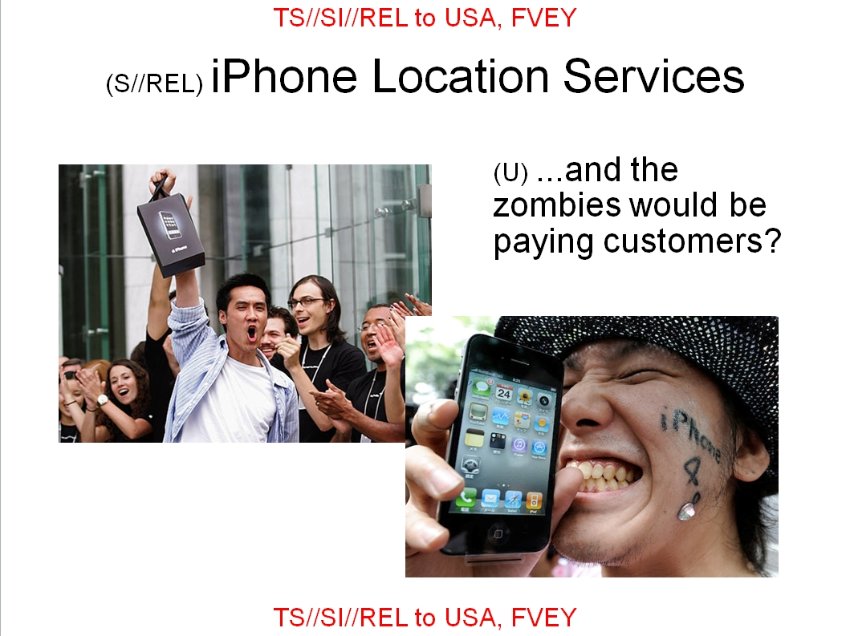
Ok. Here’s the thing. As you can read in the slide above, psychological projection is alive and well in the gallows of American’t spying bureaucracy. And ain’t it all funny? I mean, come on. As an iPhone owner I laughed. People who buy iPhones are zombies. But so are people who shop at WalMart or pay almost as much for their car as their mortgage or rent. And what about people who work for a government that creates things like the NSA, i.e. Big Brother incarnate? Not pictured here (see links below) is another slide where Apple’s 1984 ad is used as a way to communicate the idear that Apple itself has become Big Brother. (When in fact, the ad was portraying companies like IBM as Big Brother. More on Big Brother here.) Anyways. The thing I’m trying to get at is this. The summer of 2013 should go down in history as the summer of spying and how it became fashionable. For look who is being spied upon and look who is doing the spying and then look at who is revealing this to us all. Or something like that.
Links:
- How the NSA Spies on Smartphones Including the BlackBerry – SPIEGEL ONLINE
- Psychological projection – Wikipedia, the free encyclopedia
- The pot calling the kettle black – Wikipedia, the free encyclopedia
- The pot calling the kettle black – Wikipedia, the free encyclopedia
Rant on.
-tgs-
-
Braver Soul

There’s too much focus on “whistle blowing” these days turning the whole thing into a dizzying drama of silliness. Which makes it all (conveniently) very distracting. Since it’s common knowledge that spying has been part of our everyday lives since 2001, that is, since American’ts stood stupefied in ignorant-bliss to the ramifications of the Patriot Act, we’ll have to wait for the dust of history to clear before we know if what all these cowardly whistle blowers actually reveal will make a difference. To worst-writer, it won’t make a difference because, as was the case with Daniel Ellsberg, history still repeated itself. Heck, even back then rational thinking Amerians knew that Vietnam, Cambodia, Laos, was all a big fat monkey lie. And so… Drunk on consuming to survive American’t went with the flow. And. Subsequently. The war in Afghanistan exceeded both time and money the war in Vietnam. So I suppose the new American’t motto shouldn’t be life & liberty but instead stay stupid and vote your emotions. And nothing changes ever.
The shutting down of Lavabit stirred worst-writer’s thought this weekend. Here we have, dear worst-reader, a great example of the residual effect of grand-standing, disingenuous whistle blowing. The encrypted email service Lavabit, born out of the paranoia that the wizard of Google was spying on gmail users, was used by Edward Snowden to send email. Under pressure from the US government, Ladar Levinson simply shut down the service instead of turning over his servers for illegal inspection. That means, for the sake of the US Constitution, for the sake of all things private and personal, for the sake of men ruled by law as opposed to being ruled by other men, Levinson is taking a stand that even my cynical mind can empathise with. Indeed. This is an example of doing the right thing and standing up for what you do like a real man should and not running away to Russia like a wuss. My only concern now is that all these great digital minds are gonna go to waste on account they all have to run from big brother.
And remember: the truth might eventually possibly perhaps set us all free but it don’t have to.
Newz links:
- Mega to fill secure email gap left by Lavabit | ZDNet
- Lavabit founder closed his secure email service to ‘protect the privacy’ of its users | The Verge
- Lavabit privacy row: second email service closes ‘to prevent spying’ | Technology | theguardian.com
- Lavabit – Wikipedia, the free encyclopedia
- NSA’s Spy History Presents a Daunting Challenge for President Obama | Earl Ofari Hutchinson
Vid to watch:
Rant on.
-tgs-
-
Innovation Dead On Arrival
Subtitle: Real Digital Pop.
Update: Berlin Polizei want the perpetrators. Go figure.
How to kill innovation? Worst-writer needs to write a book about how they killed innovation. Reason? I think I’ve lived through the killing. That’s right. I worked for at least two dot-coms back in the day. And I have no qualms in saying that the dot-com era was systematically killed by government and bankers who conspired to prevent the birth of an obviously liberal but also stink-rich new class of innovators. The old school couldn’t have any of that. Say. I’ve already got a title for the book. I’ll call it “IDA And The Fat Happy Face”. IDA stands for innovation dead on arrival. The fat happy face is either mine or Kim Dotcom’s. And speaking of Dotcom, I really like this guy. The problem is, I only wish Dotcom would fight his battles using something other than getting rich(er) off file sharing. But then again, I think he probably tried to fight battles in Germany and was crushed and that’s why he was raided by US-lead authorities in New Zealand who think copyright is the reason for crushing all (digital) innovation. I know. Did I just contradict myself? Here’s the thing. It’s probably true that there is some kind of a conspiracy going on in the upper echelons of western power regarding innovation. All western countries are part of the conspiracy, with American’t leading the way. But the basis on which all the crushing is taking place has to do essentially with one thing and one thing only. Consuming. Would it be possible that the best way to counter government control would be to consume less? I know. Worst-writer is a dreamer and a contradictionalist. Hey! Cool. I just made that word up. Coin it. And send me a quarter every time you use it.
Rock on Dotcom.
Rant on.
-tgs-