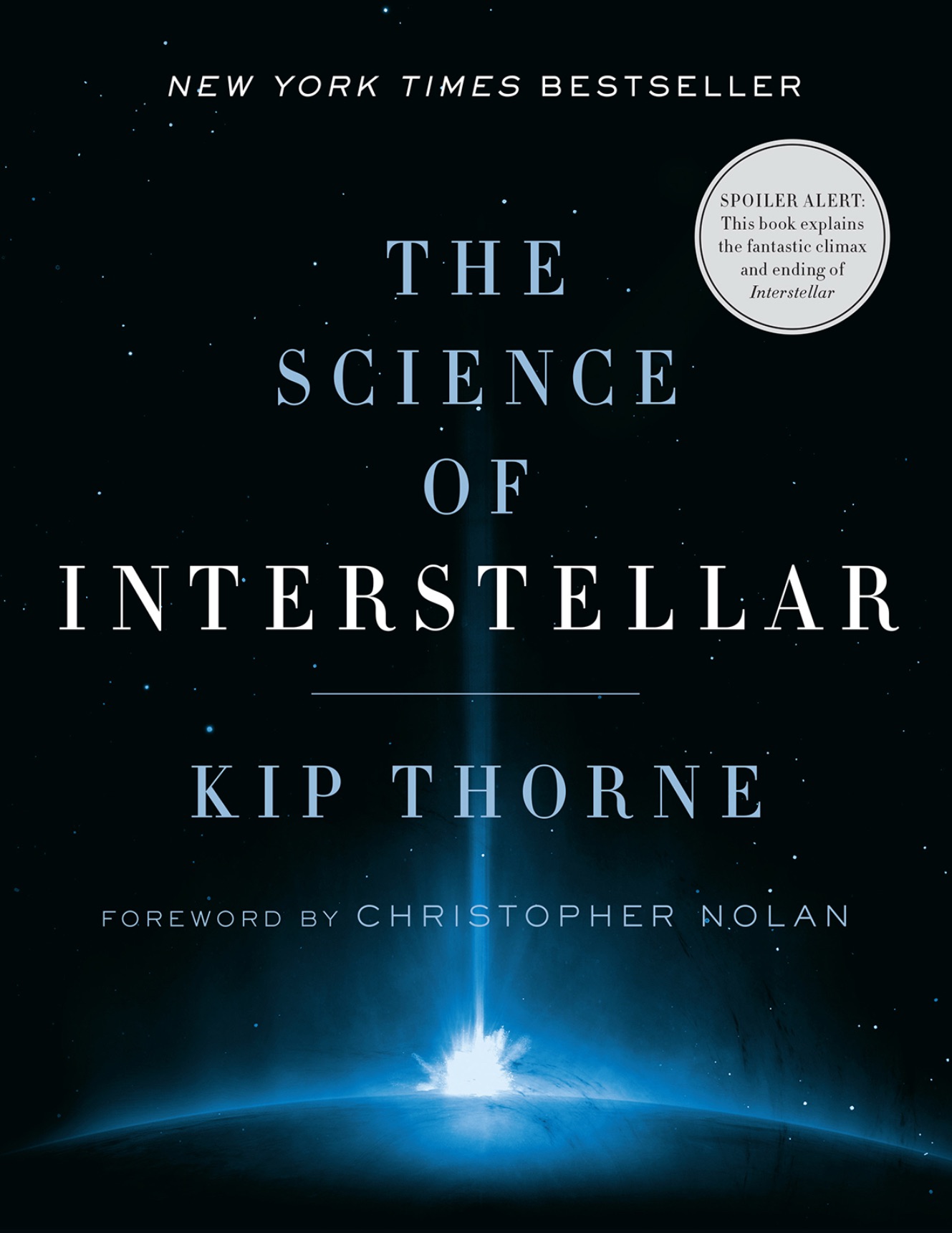
Wurst Subtitle: Kip Thorne’s The Science Of…
Three issues bugged me when I first saw Nolan’s Interstellar a few years ago. Since then I’ve rewatched the movie several times and another viewing is up soon on account of current affairs. In short. I kinda dig this film. That is. I dig the science in this film. That also said. Even though it’s taken a while, I finally got around to reading Kip Thorne’s book (about the science of the film). Not sure about you, dear wurst-reader, but Interstellar threw me for a couple loops when I first saw it–especially how it ended. And. Don’t you know. After reading it, Kip Thorne’s book threw me for a couple more loops. And so. I’ll go ahead and admit the wurst-obvious. After watching various Nolan films, especially the Dark Knight trilogy, I’ve not been impressed with Nolan. Kip Thorne, on the other hand… Ok. Inception was pretty good–but would have been better without Leo! But I wurst-die-gress.
The first of the three issues, and for wurst-me the least interesting, is the idear that Nolan has IMHO pretentiously attempted to top Stanley Kubrik’s 2001: A Space Odyssey. Did Nolan create a better film (than 2001)? Pretentious(ness) aside, I think not. On the other hand, as much as I adore 2001, the final dream sequence of the movie is what I consider Kubrik’s greatest error in film making. Which brings me to Nolan’s great film judgement error which came to me after reading Kip Thorne’s book. Kip Thorne, by-the-buy, is a theoretical physicist and was awarded the Nobel prize for some crazy physicists stuff. And so. Wow. Or. In short. Interstellar is supposed to be a science fiction movie, unlike other science fiction movies, based on real science. For those not in the know. Interstellar is the brain-child of Kip Thorne who subsequently provided all the science presented in the film. Who better qualified, eh? And. And. Again. Interstellar is a great film–at least it’s great considering that I haven’t rewatched any of Nolan’s other films. And I should also admit. As a child in the 70s who watched a lot of Batman, it took me a long time to watch The Dark Knight trilogy–which left me tongue tied not in a good way. So. Again. Again. I’m struggling with Nolan and his film making. Moving on.
Like Kubrik’s error in 2001 (the psychedelic dream sequence), Nolan’s error (pretentious(ness)) is he cannot maintain the claim that his film is based on real science through to the end. Kubrik filled space and missing narrative–thinking it was grand, ok, visibly acceptable, to just fill it all in with movie theatrics gibberish. Nolan does, of course, do a great job with all the real science up to a certain point. If only Kubrik had the same… privilege? But. I’m getting too personal.
Nolan’s problem, in wurst-writers opinion, is exemplified best when Cooper, after he falls into the black hole, is saved by higher dimensional beings (it took me three viewings to get this) who transport him from the black hole Gargantua back to earth (10 billion light years, was it?) in a tesseract (which I’m still not sure is a kind of spaceship). Of course, if you read his book, Kip Thorne does his best explaining/speculating how such a thing is/could be possible. But. In the end. Wurst-writer ain’t buyin’ it.
Ok. The third thing that bugs wurst-writer about this movie–a movie I really dig–is the brush-over, sweep it under the rug, let’s not go there part of the story where Nolan fails to explain how, after Cooper’s daughter obviously solves the gravity problem, how did they get those massive man made structures into space? I know. I know. They got those space stations, that were built on earth, that weigh lots of tons, into space because they solved the gravity problem. Really? That’s it?
- How was the gravity problem solved?
- When the gravity problem was solved, how did that enable getting those massive structures into space?
Luckily dear wurst-reader, the answer can be found in Kip Thorne’s book–not in the movie. And guess what? I don’t buy Kip’s explanation either. I mean. Get this. Kip writes in a few pages that once the gravity problem was solved mankind was able (paraphrasing), for a short period of time, to turn off earths gravity. Once turned off they could launch those massive structures into space. But Kip doesn’t stop there. Kip also adds the idear that they probably had to launch those ships real fast because once gravity was suspended the earth would soon lose its structural integrity which means it would most likely be sacrificed as the earth’s core can no longer be maintained so it’ll all go POOF once the core has no gravity controlling it! And why not on account the whole point of the movie is to find a new home planet for humanity and get everybody to it ASAP. In the meantime, kill it (earth) with fire on your way out–so there’s no evidence of what you (humanity) have done.
Needless to say, dear wurst-reader, wurst-writer has issues with the movie Interstellar. Does that mean it won’t be a movie that I’ll watch over and over and over again? No. I love this movie. The visuals–based on Kip Thorne’s science, especially the depiction of a black hole, is brilliant. The actors and screen writing is almost perfect, too–except Matt Damon. Yet. With all that wurst-said. What’s wurst-writer’s problem with Christopher Nolan? Oh wait. Did I mention… pretentious(ness)? Nomatter.
By-the-buy, dear wurst-reader. If you are, as I was, interested in the science behind the movie Interstellar, definitely check out Kip Thorne’s book. It’s not just a great read but the way he writes about his Hollywood experience is endearing.
Rant on.
TS
wurstwriter.com and good luck cause you’all need it.
 wurstwriter